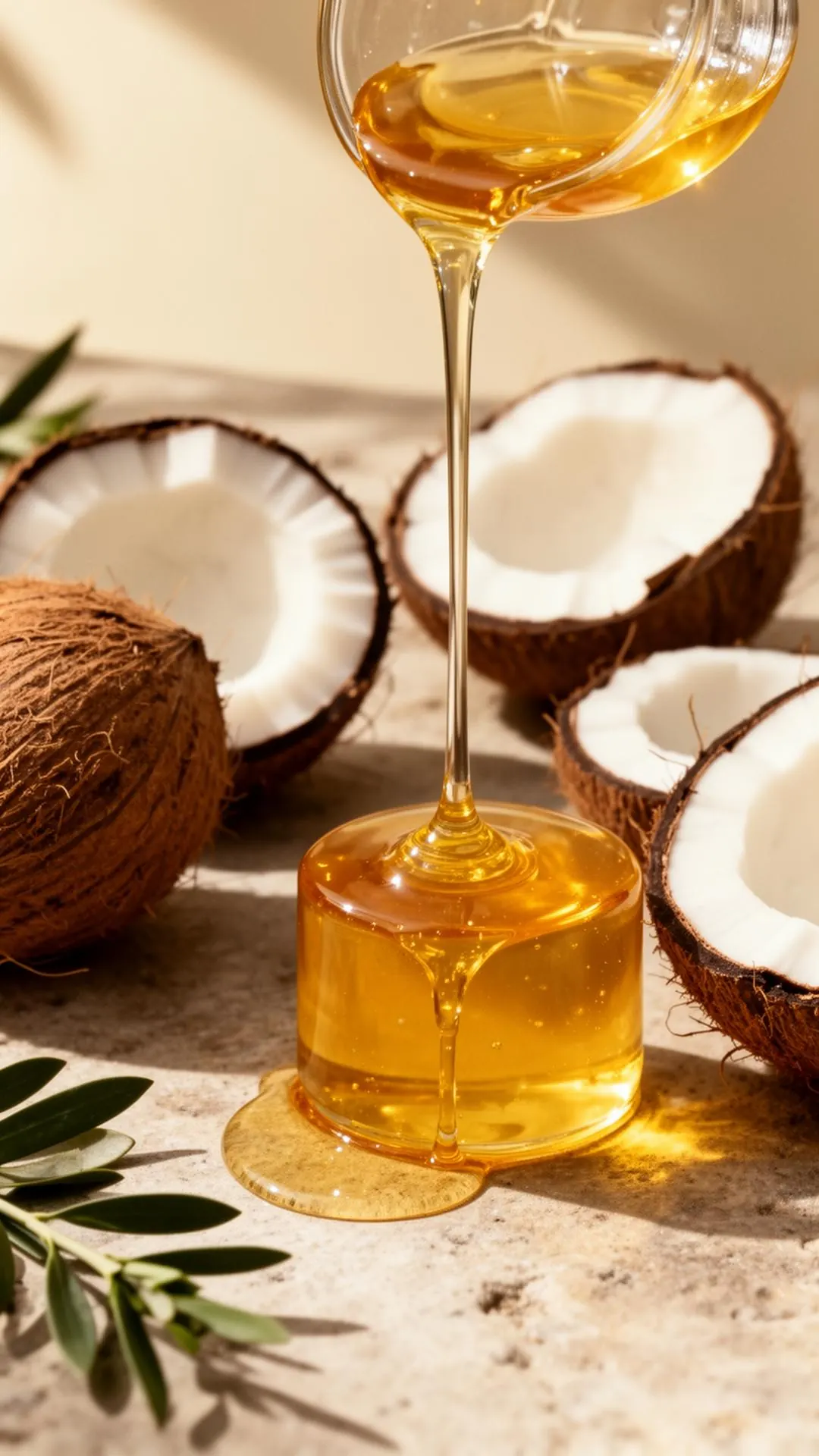
Long before skincare arrived as an industry, coconut oil was already in daily use across the tropics. It was rubbed into hair after bathing, smoothed into the skin after long days in the sun, and used to calm small irritations. The practice is older than any brand, and quieter than most.
An oil shaped by where it grows
Coconuts thrive along warm coastlines — Indonesia, Sri Lanka, the Philippines, the Pacific islands. The trees provide food, shelter, fibre, and oil from the same fruit. In places where the coconut palm is woven into daily life, the oil is rarely treated as a beauty product. It is closer to a household staple, used by hands more than measured by spoonfuls.
A few of the traditions
- In parts of Indonesia, coconut oil is warmed and smoothed through the hair of children after bathing.
- In the South Pacific, oils scented with frangipani or sandalwood are part of post-ceremony rituals.
- Across South Asia, coconut oil is the base of many family skincare habits passed down through generations.
Why the practice has lasted
Habits that survive for centuries are usually rooted in something simple. Coconut oil is local, mild, and easy to use. It softens dry skin, settles after sun, and asks for almost no effort. It is also affordable enough to be generous with — which is much of why it has stayed.
Modern skincare often pulls a single ingredient out of context, isolates it, and asks it to perform. The older way is gentler: a single jar of good oil, a moment in the day, hands and breath. The result is less spectacular and more lasting.