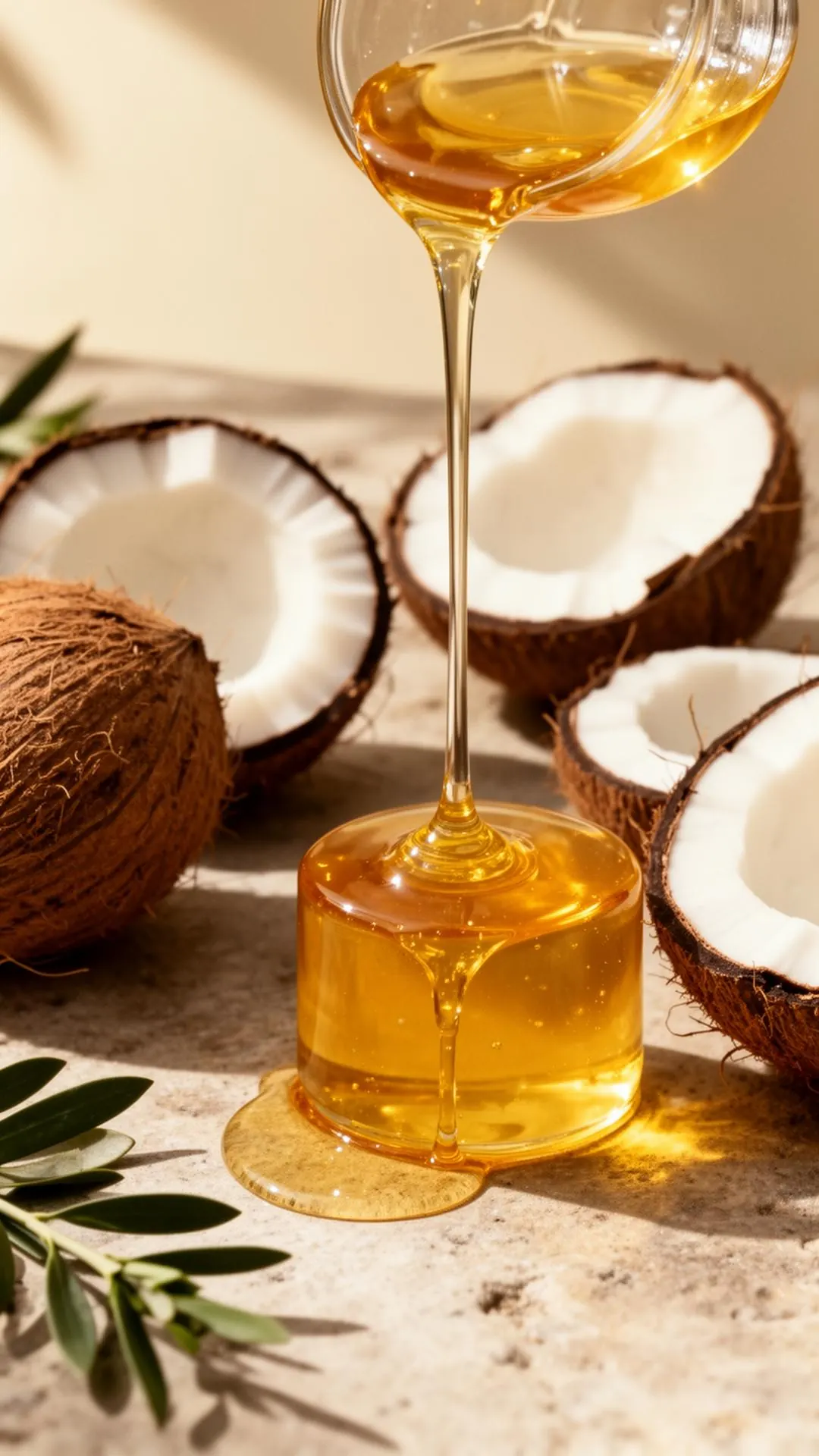
Walk down any aisle and you'll find jars of coconut oil that look almost identical. The label tells one story; the process behind the oil tells another. Understanding the difference between virgin and refined coconut oil is the simplest way to choose well — for cooking, for ritual, and for skin.
Two oils, two processes
Virgin coconut oil is pressed from the fresh meat of mature coconuts. Nothing is added; nothing is taken away. The oil keeps the soft, sweet aroma of the fruit it came from, along with the antioxidants and fatty acids naturally present in the flesh.
Refined coconut oil starts from copra — coconut meat that has been dried, often in the sun or over heat. The crude oil is then bleached and deodorised so it can sit on a shelf for longer and pour neutrally into anything. It is cheaper to make and lasts longer, but the gentleness of the fruit is largely processed out.
How to tell them apart
- Aroma. Virgin smells like fresh coconut. Refined smells like almost nothing.
- Colour. Both are bright white when solid, but virgin oil often looks slightly creamier.
- Label language. Look for 'virgin,' 'extra virgin,' or 'cold-pressed' rather than 'RBD' (refined, bleached, deodorised).
Why it matters for skin
On skin, the difference is texture and presence. Virgin coconut oil carries the lipids and the faint perfume of the fruit. Refined oil is smoother and more anonymous — fine for a kitchen, less interesting for a ritual.
Neither is wrong. They are simply made for different things. When the oil is the entire experience — poured into the hand, warmed, drawn slowly across the body — virgin coconut oil is the one worth reaching for.