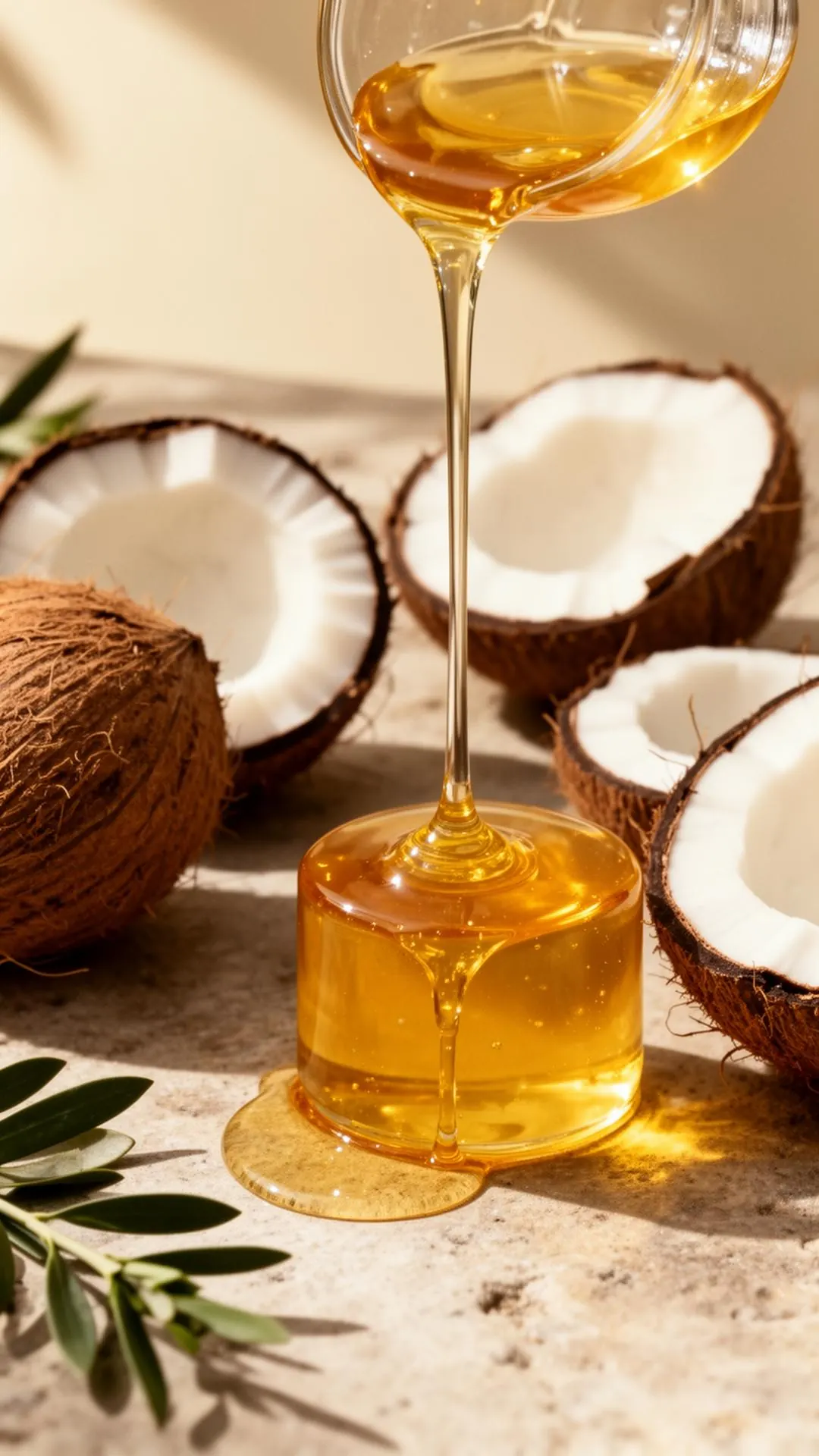
Cold-pressed sounds like a marketing word. In practice it describes a real, physical method — and a slower one than most industrial alternatives.
How it is made
Fresh coconut meat is pressed mechanically, without external heat. The friction of the press warms the oil a little, but no flame, steam, or chemical solvent is used. The oil released this way carries the natural aroma and the antioxidants present in the fruit.
What cold-pressed is not
- It is not the same as refined. Refined oil is bleached and deodorised after extraction.
- It is not the same as expeller-pressed, which often uses higher temperatures.
- It is not a flavour. It is a method that happens to keep flavour intact.
Why the method matters
Heat is convenient. It increases yield, speeds production, and lowers cost. It also strips much of what makes the oil interesting on skin — the soft perfume, the gentle fatty acids, the sense that something living was recently in the jar.
Cold-pressing produces less oil from the same volume of coconut. That is part of why it costs more, and part of why oils made this way are usually small-batch. The trade is straightforward: a slower process, a quieter oil, a better experience in the hand.